Hello Reader.

Welcome to the archives of the Shaw neighborhood in St. Louis, Missouri.  Please feel free to browse this collection of photographs, maps, articles, documents, and other records which have been organized above for your convenience by decade.  If you are seeking a particular topic, person, or address, etc., please use the search function located in the upper right corner.

Because I feel strongly that people should feel connected to history, I have chosen to place these records into this virtual ‘vault’ so that the information can be conveniently used and shared and absorbed into our collective memory.

Happy reading and please let me know if you have any questions or comments – I’ll try my best to dig into your requests!

Regards from your neighborhood historian,

Cara Jensen

Sherlock Homes historical research

http://sherlockhomesstl.com

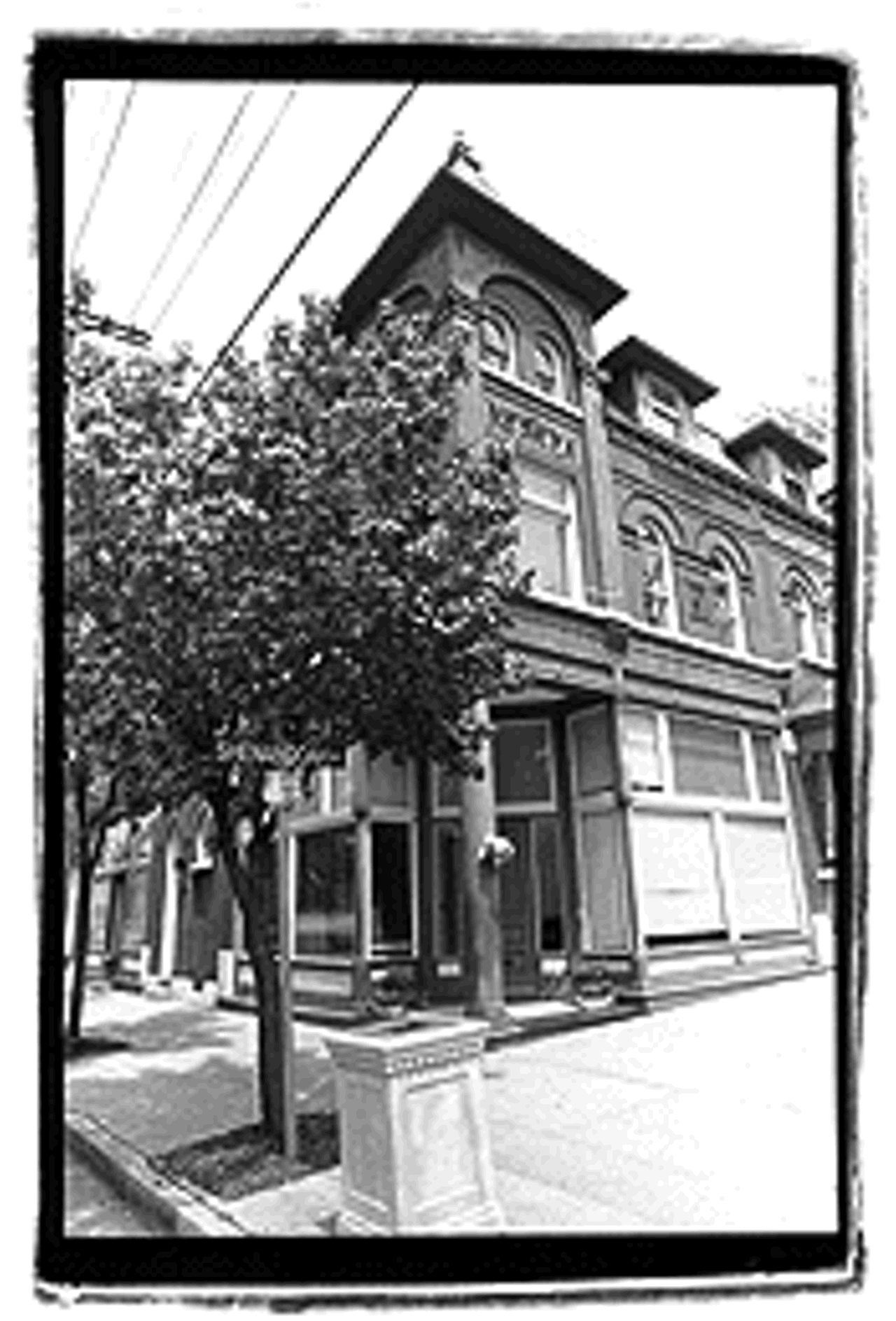
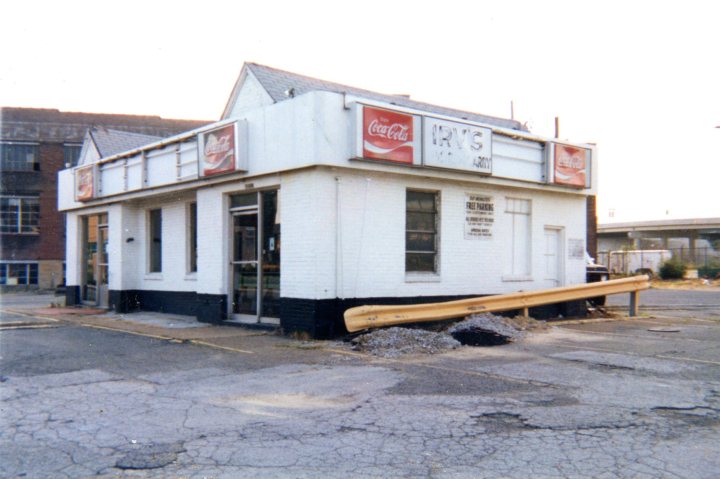
Irv’s Grill at Shaw and Vandeventer 1949-1999

Does anyone remember Irv’s facing diagonally on the southeast corner of Shaw/Vandeventer (where the MoBot parking lot is now?)  I found an article in the RFT from 1989 about the history of the diner and also some newspaper adverts that sparked my interest.  It sounds like it was a fun place!

Irv's diner shaw and vandeventer
photo courtesy of stl-style.com

from Eat In, Carry Out; by Wm. Stage, 10 Feb 1999 (RFT.com)

The strange thing about Irv’s Grill — one of them, anyway — is how it is not situated east-west or north-south at the busy intersection of Vandeventer and Shaw but, rather, sits at a diagonal, the big plate-glass windows facing southeast so that the morning sun warms the place up all nice and toasty. They’re taking it off in there as daylight burns, so that in winter the coat rack fairly blooms with jackets and scarves and caps. Besides the coat rack, the grill has few amenities — a pay phone, a stack of daily papers for sale, a cigarette machine and a jukebox that’ll get you “Honky Tonk Attitude” by Joe Diffie or some Conway Twitty for two measly bits. The jukebox picks are Ernest’s. Ernest Pruett. Call him Ernie. Ernie hails from Arkansas, and he likes his music country. He’d like you to like it too, at least while you’re in his place sopping up the egg yolk with your toast.

Ernie must be one of the good guys, because he’s dressed all in white — white pants, white shirt, the white paper fountain cap with a blue stripe in it. That’s the getup each and every day with Ernie, chief cook and bottle-washer of this old diner — some would call it a greasy spoon — coming in around 5, cooking for the breakfast crowd, chatting with the regulars, going home around 3, having filled the grumbling bellies of the hungry, the lonely, the busy, the bored.

There are 17 counter stools and six tables at Irv’s. The surfaces of all available eating spots are polished by a million elbows. A sign up over the counter says, “Ice Water to Go — 35 and 40 Cents.” You wonder about the nickel difference. People have carved their initials in the wooden pie case, at this moment holding four slices of peach pie on plates wrapped in cellophane. A middle-aged, well-fed-looking couple walk in, sit themselves down. Roberta goes over to take their order. “Two over with toast,” she calls to Ernie at the grill. “And two up with hash browns.” Roberta Limbocker — call her Bert — has been a mainstay at Irv’s for 28 years, a good long spell, true, though if you want to talk longevity, time spent behind the counter, Ernie’s got 11 years on her. Bert and Ernie are a team, an egg-frying, coffee-pouring, hash-slinging, register-ringing team, and though they may not be as cute and lovable as the Sesame Street Muppets of the same names, they are indeed characters, as seasoned in their own way as the grill at Irv’s.

A storm last year blew off the faded panel sign above the door that read, “Irv’s Good Food,” and now it’s gone, giving the place an incomplete look, like a missing front tooth. Because of that sign, people still call the place Irv’s Good Food, but in the phone book it’s Irv’s Grill. Irv was Irv Marchbanks, who opened the diner in 1949. Back then all these little food stands — A&W, Steak ‘n Shake, Courtesy Drive-In — had curb service, and Irv’s was no exception. Irv kept a gaggle of teenage girls employed until 1958, when he decided to cut his losses. Ernie came on in 1960 — too late, to his regret, to partake in the curb-service era. “Irv,” says Ernie, “told me he paid them a dollar a day, but he always said it was too much trouble taking care of them little girls. Look out the window and half of them’d be gone, he said. Got in a car and drove off with the customers.”

Ernie started as a dishwasher at Irv’s and gradually took on more responsibility until Irv, readying to retire, sold the place to Ernie in 1977. The business, not the property — that’s right, Irv’s has leased its location all these years, and now the shoe is about to drop.

The lease is up at the end of February, never to be renewed. It’s not a punitive thing — Ernie’s been a responsible tenant — it’s just the way life goes. See, the Missouri Botanical Garden just up the street plans to turn it into a parking lot. That’s their prerogative; they bought the property in 1996. As many are aware, the Garden has been expanding its operations for several years now. Last year saw the Monsanto Center, a capacious state-of-the-art research facility, open its doors across the street from Irv’s. And though the Garden is seen by some as a creeper vine, spreading its tendrils all over this portion of the Shaw neighborhood, sapping the life out of small businesses like Irv’s, others try to see sunshine in the forecast. Willie James has a shoe-shine-and-repair shop on Castleman Avenue, catty-corner from Irv’s Grill. “The Garden expansion kind of helped the neighborhood in a way,” he says, buffing a black wingtip to a high shine. “They got these security guys riding around now.”

Maybe it’s for the better. After all, business had fallen off in the last decade or so. Back when Irv opened the place, the area was solidly working-class. Within three or four blocks you had R-F Spaghetti, Banner Iron, Carondelet Foundry, Westinghouse and Foster Bros., a maker of hospital beds. They’ve all since gone out of business or moved to other locations, taking Irv’s customer base with them. All those appetites that once spent themselves at Irv’s had to find another place to get their bacon and eggs, their hash browns and joe. But the place has always had the benefit of being near the interstate, I-44, and now there’s that new exit ramp at Vandeventer — why, you’d think business’d pick up a bit. Maybe it has, but what does it matter now?

It’s startling to imagine that a place that has been open around the clock, closing just one day a year — Christmas Day — could be shuttered forever. Ernie himself is not bitter over the looming finality of it all. Resigned, maybe, but not bitter. “I tried to buy the property years ago,” he says with a shrug, “but I couldn’t borrow the money. But as far as the lease not being renewed? That’s progress; what can I say? Except that Shaw’s Garden ain’t mistreated me. They ain’t done nothing to me either way. I wouldn’t know ’em if they walked in here.”

What will he do when the place closes? “I’m getting too old to do anything,” he replies, flipping a pancake. Is he kidding? Hard to know, but at age 76 Ernie still puts in 10 hours a day, seven days a week. Probably what he means is it’s too late in life to switch horses, work somewhere else, take orders from some kid just out of college. That sort of thing.

Eggs — up, easy, scrambled, runny — are the most popular thing on the menu, and 60 dozen of them are delivered fresh weekly by a driver from the Germantown Egg Co. in Germantown, Ill. But at night the most popular item, hands down, is the Nightmare: two fried eggs with potatoes covered with chili for $3.35. The Nightmare is more than a menu item. It is a legend, an antacid-defying entity, a fortification against colds, croup, ague and menstrual cramps.

Former neighborhood resident and filmmaker Michael Steinberg (Amateur Hour) recalls a pivotal incident involving this zesty dish: “One night, in the middle of writing a script, I was completely blocked, so I went to Irv’s. You know they lock the doors at night? Always the sign of a good restaurant. So, with Patsy Cline on the jukebox, I sat at the counter and ordered a Nightmare. The counter lady, very motherly, told me there were salmon in the Mississippi. Her last husband, who fished the river, said the salmon weren’t safe to eat, but she disagreed: ‘Those fish’re safer than a chicken you’d pick up off a shelf.’ Inspired, I went home, finished my script and salted it with parts of the dialogue at Irv’s.”

It’s true — they do lock the doors at night, but they always know to open them when the college crowd shows up, like clockwork, soon after the bars empty out. At least two generations of former collegians can reminisce about late-night drunken sojourns to Irv’s for real food. A short stack would never do. Biscuits and gravy? A close second, maybe, but the Nightmare was the thing. Hot and quick with just the right amount of greezy — the perfect end to an evening of reckless drinking. “I heard that was the initiation at one of the fraternities,” says Julie, a five-year employee at the grill. “They had to get a Nightmare at Irv’s. Bet you St. Louis U. got more of our stuff than we got here,” she adds. “Plates, salt and pepper shakers, whatever they can get their hands on, to show they’ve been to Irv’s.”

Hank is on the jukebox singing “Your Cheatin’ Heart” when a semi driver walks in with a city street guide and asks for directions to 500 S. Spring St. — some factory, he says — and three customers get into a heated discussion on the best way to get him there. What are these lost truck drivers going to do when they bulldoze Irv’s to the pavement and turn it into a parking lot? Approach the attendant in his island-booth, ask “Hey, how do I get to Villa Lighting?” And he’ll reply, “Heck if I know — I’m not from around here.”

4175 Shaw – Vogt Filling Station

The old gas station at the corner of Shaw and Klemm is up for redevelopment.  I thought to look into the history of the building and the story of its people.

4175shaw
image via urbanreviewstl.com

4175 Shaw was built, according to city records, in 1924 on the site that had been used as outhouses for Mullanphy School.

Mullanphy outhouses Shaw and Klemm
Official Report, Volume 19, Saint Louis (Mo.). Board of Education, 1912.

Charles Vogt was the proprietor of the filling station at 4175 Shaw and lived across the street with his wife Eula (nee Lane) [1], daughter Joan, and son Charles Jr. at 4170 Shaw. [2]  (Interesting note:  current and long-time Shaw resident Don Burrus lived next door to the Vogts at 4168 Shaw in 1940 – he was 5 years old!)  Charles Vogt came from Perryville, MO, where his father was the proprietor of the Perryville Mercantile Company.  After his death in 1954, the filing station at 4175 Shaw was operated by Barney Brimmer. [3] [4]

Earl ‘Barney’ Brimmer and his wife Katherine (nee DellaRatta) lived at 3232 Longfellow in the nearby Compton Heights neighborhood.  He had grown up at 4164 Shaw, neighbors of the Vogt family, and had perhaps worked at the filing station as a teenager.  Their son Jack was listed in the 1960 City Directory as an attendant at the 4175 Shaw gas station.  Katherine (Kay) Brimmer was active in the Compton Heights neighborhood, being featured in Deb Peterson’s Post Dispatch column in 2011:

BUBBLY BRIMMER: Vivacious Kay Brimmer celebrated her 93rd birthday on Thursday night with a multitude of well wishes, a bouquet of ballons and lots of glasses held high at Just John’s in The Grove.

Brimmer, of Compton Heights, who easily passes for a woman 25 years younger, was feted by family and friends.

Among family members who celebrated were her daughter and son-in-law, Kathy and Mike McIver; granddaughter Katie McIver; grandsons Patrick and Joe McIver; and Joe’s wife, Suzanne McIver.

The crew of friends and neighbors included Patty Burke, Charlie Daniels, Jeff Diggs, Debra Carnahan, Wendy Zimet, Jian Stennet, David Sillin, Catherine Gambaro and bar owners Jeremy Ruot and John Obercrammer.

The diminutive and impeccably dressed Brimmer told revelers that the key to her long and happy life is her great family and knowing how to have a good time. True to her word, Brimmer started the party at 5 p.m. and was still kicking up her heels at 10 p.m.

Kay Brimmer passed away this past July at the age of 97. [5]

The service station at 4175 Shaw was operated until the mid 1980s under the Gulf Oil company, according to the Tower Grove CDC.  I would love to find an old picture of the station in operation – if anyone has memories or stories of the station please let me know!

Notes:
1 – Ancestry.com. Missouri, Marriage Records, 1805-2002.
2 – Ancestry.com. 1940 US Census. St Louis Missouri. ED#96-367.
3 – Ancestry.com. U.S., Find A Grave Index, 1600s-Current.
4 – Ancestry.com. U.S. City Directories, 1822-1989.
5 – Classified obits. St. Louis Post Dispatch. August 15, 2015.

TEARING DOWN THE GARDEN WALL – RiverFront Times article

The Missouri Botanical Garden teams up with the Shaw Neighborhood, infamous for its feuds, to reach across I-44 in an effort to rescue McRee Town. All that’s needed are a few miracles and about $50 million.

In many ways, Jane Anton got what she wanted, although in the end it didn’t turn out as she had hoped. Back in 1983, Anton, a psychologist in private practice, was looking for a building where she could live, have her office and provide “incubator” space for women wanting to start their own businesses. She wanted to be near either Tower Grove Park or Forest Park. The building on the northeast corner of 39th Street and Shenandoah Avenue, which once housed Whitey’s Tavern, fit the bill. It was a historic building, and it was in the Shaw neighborhood, a city enclave that was being revitalized. It had apartments attached, it was just three blocks from Tower Grove Park, and it had a grocery store, not a supermarket, across the street.Anton is from Iowa but had lived in New York and California before coming to St. Louis in 1974. She wanted an urban feel to her home and business, and she knew she had found that in Shaw. The roots of that feel went back to 1857, when that incredibly rich gardener Henry Shaw began to plan the residential area immediately to the east of what would eventually become the Missouri Botanical Garden, more commonly called Shaw’s Garden.

“They really laid it out so it had multiple classes built into its housing structure — from Flora Place in the middle, which has large single-family homes; then on the sides of it you run into smaller but substantial single-family homes; then the two-families begin working in; and then a street like Shenandoah has almost all two- and four-families and then some larger apartment buildings,” Anton says. “It used to be the end of a trolley line.”

The structure that had just a few years before housed the rambunctious Whitey’s Tavern, known for fights in which someone might fly through the bar’s plate-glass window, was renovated into office space for women to use part-time for their start-up businesses. A career-consulting firm run by Anna Navarro was part of the mix. Anton’s business thrived, and for 11 years she lived and worked at 2256 S. 39th St.

That total immersion in a neighborhood that seemed to be in permanent transition made those 11 years far from dull. Eventually Anton tired of the bickering, the neighborhood feuds, the class conflict and, to a lesser extent, the crime. One tenant of an apartment of hers was shot in a drug deal gone bad. So in 1994, she kept her business in Shaw but moved less than a mile away, deciding to live on the other side of Shaw’s Garden.

“I had become pretty discouraged and disillusioned with the leadership of the neighborhood. Shaw has been notorious for being contentious and having feuds of various sorts,” says Anton, citing the spat that led the city to fund two housing corporations — St. Margaret of Scotland Housing Corp. and the Shaw Neighborhood Improvement Association — to work the same area. There was also the ongoing war against licenses for liquor and beer. When the owner of the Tom-Boy across the street, Leuther’s Market, died and his son and widow eventually decided to sell the market, the new owners, who were immigrants, wanted to maintain the store’s liquor license.

“The neighborhood association went into its no-compromise mode,” recalls Anton. “I had people stopping me on the street, saying, “Oh, I understand Leuther’s been bought by Palestinian terrorists who are going to turn it into a liquor store.’ They said they heard it at their block meeting. People are scared anyway. There’s an edge of fear in living in the city. If you just start fanning those flames and play on people’s fears, they get pretty hysterical and animated. There was just no room for compromise; we tried to negotiate.” The new owners had wanted at least to be able to sell beer and wine to go along with their deli trade, but it was not to be. When Leuther’s Market was sold five years ago, there would be no liquor license.

As it turns out, Anton’s choice — living elsewhere but continuing to work in the Shaw neighborhood — would only last a few more years. Considering her experience with the fractious nature of the neighborhood’s politics, perhaps Anton should have known that she could not go quietly when she made the decision to sell her building and move her business.

The decision by Anton to leave comes at a time when the neighborhood association in Shaw has banded together with three other neighborhood associations to concoct a redevelopment plan for the combined area, which is to be called the Garden District. So despite a history of turmoil and an image as the Balkans of St. Louis, Shaw neighborhood residents have closed ranks to launch what looks to be the most ambitious attempt in the city to resurrect a neighborhood. The fact that the plan has the backing — financial and institutional — of the Missouri Botanical Garden greatly increases the odds that it may come to fruition.

The main objective of the plan is to salvage McRee Town, an economically depressed and socially troubled area north of I-44 and west of 39th Street. That Shaw, which doesn’t have to look elsewhere for grief, would be ambitious enough to attempt such a renewal shows that its leaders are not faint of heart. It also shows that they are pragmatic enough to know that only I-44’s eight lanes of concrete separate Shaw from McRee Town, a neighborhood with half the population and half the median household income of Shaw.

A lot of McRee Town’s symptoms, like those of many urban neighborhoods nationwide, can be traced to when it was amputated from the rest of its neighbors by an interstate highway. After a swath was cut through the middle of the area in the early ’70s, the land sat fallow for several years before the highway was finished. More than one observer thought that some sort of legal action should have been taken to ameliorate the aftereffects of the interstate. Hemmed in by the new highway to the south, railroad yards and light-industrial firms to the north and west, and hospitals along Grand Avenue to the east, McRee Town started to fade.

The worst of McRee Town’s criminal activity appears to have passed, as a result of depopulation and arrests, but when it was flaring up, it was as bad as it gets. Police blamed an internal feud among a gang called the Darkside for eight killings and 20 shootings during a 19-month period in 1993-94. That’s within an area of less than one square mile.

Though violent crime seems to have diminished, horrific violence continues to occur on a more sporadic basis. On April 7, 1998, during a fight between two feuding groups of girls, 14-year-old Maneabra Pryor was fatally shot. In November 1998, a 17-year-old unloading his .45-caliber semiautomatic gun accidentally shot 6-year-old Porsche Champion in the head, critically injuring her.

So when residents of Shaw look across I-44, they might think they’re seeing storm clouds headed their way. Also, metropolitan pundits see an area like Shaw as a barometer for the urban climate, suggesting that as Shaw goes, so might the city. And if American society can best be described as a tossed salad rather than a melting pot, where people of various backgrounds and classes live in proximity but don’t often interact or agree, then Shaw is a working microcosm of that metaphor.

Shaw is racially mixed, with about a 50-50 split between African- Americans and whites. In some 60 square blocks, it has about 160 Section 8 federally subsidized rental units and houses on Flora Place that often sell for more than $200,000. In a recent South Side Journal, the “What Did It Sell For?” column listed houses in the Shaw neighborhood that sold from $15,000, at 4132 Shenandoah, to $184,000, at 7 Shaw Place.

Anton knew this when she moved to Shaw. The mix of realities is one of the main reasons she picked the corner of 39th Street and Shenandoah Avenue. But finally, enough was enough.

“The Shaw neighborhood is just a bunch of paradoxes,” says Anton. “I find that all very interesting, the diversities and paradoxes of class and race and people having different points of view — it’s really exciting. But if it’s always polarized and everybody goes to war and draws the line and there’s no compromise and there’s no discussion, that’s what wore me out.”

Fear and loathing in Shaw

In the end, when Anton decided to sell her building, she set off a maelstrom of controversy that exceeded anything she had experienced. In March, she decided to sell to Covenant House, an international child-welfare organization that Anton describes as serving youth ages 16-21 “who really get totally lost in the system.” That much sounded good to Anton. “They can make a huge difference in those young people’s lives,” she says. “They give them an alternative.”

Covenant House Missouri was not going to be a shelter, and it would not be open all night. It was planned to offer educational and vocational assessment and counseling to youth, giving them employment guidance and, possibly, help getting high-school equivalency degrees.

An initial discussion at an April 19 board meeting of the Shaw Neighborhood Improvement Association went well for the idea, with a 12-2 vote in favor of Covenant House’s move to Shaw. But the vote was contingent on the approval of the “affected blocks.” That’s when the process headed into the ditch.

“Then, again, we had this fear-and-loathing-in-the-Shaw-neighborhood tactic. There was a group that was absolutely, totally dedicated to, at all costs, preventing Covenant House from being there,” says Anton. “To them, having Covenant House there would prevent other residential development on the corner, it would lower property taxes, it would increase crime, it would cause traffic jams — it was awful, horrible, terrible. And, again, there was going to be no compromise.”

Rich McGovern, who lives at 3860 Cleveland Ave., didn’t see it that way. Covenant House would be moving directly behind his house; in front of his house was the Benedict-Joseph Labre Center, a transitional residence for homeless and mentally ill men run by Peter and Paul Community Services. For McGovern at least, this was not so much a NIMBY — “not in my backyard” — complaint, it was a backyard and frontyard concern.

“I’ve been here since 1980, and nothing’s ever bothered me,” says McGovern. “But at some point in time I don’t think I should have to take my residential neighborhood and have a Peter and Paul in front of me and a Covenant House in my backyard. At some point I consider all my work on my house — I’m throwing it away.

“What family, what mom and dad with two kids are going to see my “For Sale’ sign some day and say, “Hey, I want to live in this house. I want to live across from schizophrenic men, and I want my kids in the backyard, when they’re playing, to be looking at the comings and goings of troubled youth between the ages of 17-21.'”

Even though Covenant House said it would only serve youth from the Shaw neighborhood, McGovern was skeptical that they wouldn’t go looking for clients and that if someone came from farther away, they would turn them down.

Gina Ryan, a former president of the Shaw Neighborhood Improvement Association who lives at 3822 Flad, opposed the sale and didn’t like the way its opponents were portrayed. “There’s a handful of people in the neighborhood who are Covenant House supporters. It’s gotten to be an awful lot of finger-pointing about who’s tolerant and who’s not,” says Ryan, who feels that’s a bogus charge. “Not one person said Covenant House is a bad organization or they’re running bad programs. Everybody just said it was the wrong location for it.”

Those who knew of the sale to Covenant House early on “didn’t anticipate that everybody would react like they would,” says Ryan. “It was treated casually, and it backfired.”

On April 27 at the meeting of the affected blocks, the vote went 16-5 against Covenant House’s being in the building. Trouble was, in the meantime the city had issued an occupancy permit on the basis of the proposed usage for the building and the initial approval by the neighborhood association, even though the approval was stated to be “contingent” on the OK of nearby residents.

As if the situation couldn’t get any stickier, the occupancy permit was revoked and the Board of Adjustment held a hearing. Presiding over the meeting was John Koch, a former alderman for Shaw who was familiar with its pitched battles — he once survived a recall effort. People took days off from work so that they could testify. Opponents of the deal cited parking problems, noted that the intended use of the building was different from the current use and stressed the expected negative impact on the neighborhood.

The board listened and, about a week later, issued a conditional-use permit limiting the operation to daylight hours and banning any residential component and any recreational or “social programming on the exterior grounds.” The program was to “focus only on the youth in the Shaw neighborhood who are between the ages of 17-21.”

The opponents were not pleased. With the Benedict-Joseph Labre Center, a shelter for abused women, the Missouri School for the Blind, Cornerstone Child Development, the planned American Youth Foundation and several other agencies, the addition of Covenant House made Shaw appear, as one resident said, as if it were the “Social Services R Us” neighborhood.

What also galled the residents was that Covenant House had tried and failed to locate a facility in the Central West End, at 4314 Lindell Blvd., and later at the corner of Manchester and Boyle avenues. Each time they had such difficulty with either the zoning or the redevelopment authorities — Washington University Redevelopment Corp. and McCormack Baron — that they looked elsewhere.

Suggestions that Covenant House try buying the soon-to-be-vacant International Institute on Park Avenue or locate on a busier thoroughfare went nowhere. One Shaw resident, Kathleen Sharkey, believes Covenant House wanted to locate in a nicer neighborhood because its “volunteers from the Junior League” wouldn’t go to McRee Town or other areas where a building might be cheaper and more convenient. Sharkey, who says she has donated to Covenant House in the past, thinks the new social- service agency on the block will be a magnet for trouble.

“There is going to be a higher concentration of troubled kids in the neighborhood,” she says. “We have troubled kids now; nobody is denying that. In fact, (about a week) after the Board of Adjustment hearing, I was mugged — right here in the neighborhood. It was an 18-year-old who would be a prime candidate for Covenant House services. But why bring more of that kind of kid into the neighborhood? I was standing with two other people, a man and a woman; we were on a really good block. This guy was so bold. I think he needed a fix of drugs. Twelve noon, broad daylight. I had my purse over my shoulder, and he grabbed the purse and threw me down. The man I was standing with started to fight with him.”

The assailant got away, but within a week an arrest was made in connection with the assault on Sharkey.

There is the option of an appeal on the Board of Adjustment ruling, but that would mean hiring a lawyer. In this case, Covenant House has deeper pockets than a bunch of disgruntled neighbors. “They are in essence a multinational corporation with $132 million in assets,” says Sean Thomas, of 3805 Cleveland Ave. “They have money to burn.”

Marian Wolaver, executive director of Covenant House Missouri, hopes the worst is over as she prepares for an Aug. 16 opening of the facility. Wolaver says the main attraction of the building was it needed no real renovation and lay in an area that needed to be served. “There are many people who support what we’re doing, and there are some people who don’t,” Wolaver says. “Quite frankly, I don’t have time to go around rapping on people’s doors and asking if they’ve changed their mind because we’re busy trying to get going so we can help kids. That’s the bottom line.”

Now that the Board of Adjustment has ruled, perhaps the most emotional scenes are over. At one earlier meeting, an opponent got in Anton’s face.

“He says, “I know who you are — you’re the one who’s making them close this deal. If it weren’t for you, they’d go away, and we want them to go away, so it’s all up to you. And you’re just doing this because you’re greedy.’ He says this to my face. I said, “You don’t know who I am. You don’t have any idea what I’m about.’ He says, “Yes, I do. Where do you live? Are there social-services agencies where you live?’

“It doesn’t make any difference to these folks,” Anton says. “He was whipped into this shape that he was saving his neighborhood from the evil Covenant House.”

As it turns out, after living for 11 years in Shaw and several more years on the other side of Shaw’s Garden, in the Southwest Garden neighborhood, Anton has moved to Pacific, where she lives on 5 acres and commutes to her practice on Union Boulevard near Forest Park. She says one of her main motives in selling her building was that she was tired of being a landlord. Had she found a buyer who would have let her keep her office there, she would have stayed as a tenant. When it came to Shaw, she was simply sick of living there.

“I thought I was moving into an urban neighborhood that would be revitalizing, that was going to be coping with its problems, that was diverse but that was all sort of working together,” she says. “I didn’t have any Pollyanna notion that you didn’t have neighborhood fights, but I thought that there was some common interest that the neighborhood could perceive and rally around — and the Shaw neighborhood doesn’t have one and can’t do it. As soon as there becomes a common interest, instead of getting a consensus, it draws a line down the middle and chooses sides.”

“This is as hard as it gets”

If Anton’s theory is correct, that Shaw is so splintered and hell-bent on process and confrontation that it can’t perceive a common cause and work toward it, the Garden District plan is doomed. If she’s wrong, the plan has a chance of turning around McRee Town, one of the city’s most beleaguered areas, while at the same time bolstering the image and reality of the Shaw, Southwest Garden and Tiffany neighborhoods. If all that happens, then the anxieties at the Missouri Botanical Garden — that it will be corralled by a smutty urban streetscape of the sort that many of its visitors might only see on the 10 o’clock news — will be eased.

Ed Roth, a lawyer and president of the 17-member Garden District Commission, is a point man for the plan. He thinks all the contretemps in Shaw are a sign of health, not sickness.

“These neighborhoods are robust in their citizen involvement and place a premium on process. When any new initiative is introduced that could have a material effect on the neighborhood, or a part of the neighborhood, the pros, the cons, the critical path, the timeline, the who, what, when and where are thoroughly thrashed out by involved citizens,” says Roth. “Thus, unlike other parts of our region, where initiatives are shepherded through by insiders, pols, rabbis or power brokers, here people get involved, often in passionate ways that defy Robert’s Rules of Order but almost always in ways that, because of freewheeling involvement, ultimately yield the best result for the larger community.”

Perhaps the most striking aspect of the Garden District plan is that everyone, or most everyone, seems to be kicking in on the chorus. The neighborhood associations of Shaw, Tiffany, McRee Town and Southwest Garden and the powers that be at the Missouri Botanical Garden are backing the plan and have representatives on the Garden District Commission. Ald. Stephen Conway (D-8th) and Deputy Mayor Mike Jones pledge support from the city.

The entire plan might take about $50 million to pull off, but Jonathan Kleinbard, the Garden’s deputy director and a commission member, believes the first phase is more in the several-million-dollar range. That first phase includes a privately run community center, similar to the Herbert Hoover Boys and Girls Club, surrounded by softball fields and new housing. The four-square-block area to be cleared for that is bounded by Blaine, Lafayette and Thurman avenues and 39th Street.

In the first five years, the goal is to construct about 100 single-family homes, 75 townhouses and 60 units of elderly housing around the community center. The housing units in the area west of Thurman would be rehabbed when possible, or new “infill” units would be constructed.

So far the money has come from the Danforth Foundation, which kicked in $1.5 million and $250,000 in Neighborhood Assistance Program tax credits. The Garden has helped pay for some planning expenses, but, more important, it has pledged to use its influence for future fundraising.

Though the early stages of the collaborative process appear to be going well, progress has not been made without glitches. The first bump in the road was when a mailing was sent out detailing the May 25 Garden District Commission meeting. Enclosed was a 12-page “Report to the Community” that explained the plan. Roth admits that the mailing service hired to send this out mistakenly left much of McRee Town off the mailing list.

When Jim Roos got a copy of the report, alarms went off. Roos is the head of Neighborhood Enterprises Inc., which he describes as a “self-supporting business/ministry” that manages about 75 buildings comprising about 225 rental units, about half in McRee Town and the rest in the surrounding neighborhoods. Most of the units are modest apartments occupied by low-income families. He owns or manages 12 buildings in the area to be bulldozed during the first phase.

Roos is a veteran of the area, working at 2752 Lafayette Ave. and living at 3012 Lafayette, about six blocks east of McRee Town. A graduate of Concordia Lutheran Seminary, Roos has a John the Baptist zeal about his work. Once, when showing a friend bullet holes in his back door, possibly put there by an angry tenant, his friend asked him, “Why don’t you leave?” Roos answered, “They missed.”

So when he saw the plan and interpreted the lack of a mailed notice as an intentional slight, he printed up letters to “owners and tenants in 3900 and 4000 blocks of Lafayette, McRee and Blaine,” that told them, “The Garden District plan has an EVICTION NOTICE for all of us.” Roos went on to state, “We have been excluded from the development, implementation and conclusion of this plan.”

Since that broadside in May, Roos’ relationship with the Garden District folks has eased. Though Roos and others still have major concerns about the displacement of low-income families, the two sides are talking.

“When we circulated the conceptual plan, Roos came on like gangbusters, as though this came out of a star chamber, that this was all secret and all this kind of business,” Roth says. “We reminded him that this was a well-publicized process and that if he had attended a neighborhood meeting over the past year he would have known about it.”

Both Roth and Conway believe a role exists for Roos in the process, particularly in renovating and salvaging some of the buildings west of Thurman, outside the initial target area. “Jim has a mission in his heart, and there should be a role for him, a bona fide role, in this,” says Conway.

John Pachak, one Shaw resident who works with Roos as part of Sanctuary in the Ordinary, a nonprofit corporation that owns properties designed to meet the housing needs of low-income people, is also concerned about what will happen to the disadvantaged in McRee Town. He says that, often, such developments are “an assault on the poor.”

Pachak, who is also program director of Catholic Community Services, at 1202 S. Boyle Ave., says the Garden District Commission is not representative of the affected area, because it has no renters or low-income residents of McRee Town. “The plan that’s been passed out shows a lot of greenspace where people are living now,”says Pachak. “McRee Town needs to be redeveloped, but our hope is that it would be inclusive of the people who are living there rather than forcing them out to make it look prettier for people going to visit the Garden.”

Kleinbard, who was hired by the Garden after working for more than 20 years in neighborhood development for the University of Chicago, is aware of that criticism. He wants to ease those fears and to admit the underlying basis for them. “The first thing that happens here is to provide decent, affordable housing for an underserved population,” says Kleinbard. “There are 40-50 households that will have to be relocated. Our commitment has to be to provide them better housing in the same area, if that’s where they want to stay.”

And, yes, the Garden is concerned about how it looks from the highway.

“If people drive down I-44 and they see boarded-up, devastated buildings along DeTonty and Lafayette, they’re basically not going to the Garden,” says Kleinbard. “If they drive down Shaw and they see boarded-up windows and lots with abandoned cars parked in them, who the hell is going to come here? Ten years from now, that’ll be it — unless you reverse it.”

So Kleinbard set out to get the neighborhoods to take the lead, with the Garden behind them. “There’s nothing altruistic about it. It’s totally self-interest,” says Kleinbard, who lives on Flora Place. “Just like you want folks who live here to say, “Hey, this is in my interest to have my street look good.'”

That some suspicions have been raised early is no surprise to Kleinbard, who was a catalyst in the renewal of the Woodlawn, North Kenwood and Oakland neighborhoods in Chicago. “There are people who are not for this. The knives are out; that’s OK. That’s good. I just like them to be in daylight.”

Pachak is suspicious that what passes for inclusion where he lives in Shaw doesn’t always mean any more than mere coexistence. “It’s a liberal idea of diversity,” says Pachak. “You talk about living next to somebody else, but it’s really only because you’re already there and people who are different are moving in and you’re not leaving. It doesn’t mean you’re making contact with those people or making connections with them.”

Roth begs to differ. He stresses the All Shaw Choir as an example of an activity that involves a wide range of residents. Also, Roth believes that the decibel level of recent spats has diminished: “I think there’s more unity in the neighborhood. There’s less conflict than 10 years ago among various factions in the neighborhood.” Part of that is the result of action against problem properties.

“We have a better handle on absentee landlords than we did 10 years ago. Absentee landlords who neglect their properties know that the people in Shaw are going to kick their ass,” says Roth. “As a result, we are doing much better, with people taking better care of their properties and making sure their tenants are respectful of their neighbors. We haven’t solved the problem, but we’ve really gotten a handle on it.”

As for reaching out to McRee Town, Roth sees the eventual reopening of the Thurman Avenue underpass of I-44 as a symbolic rejoining of the neighborhoods. Shaw Neighborhood Improvement Association president John Merideth says that blocking the underpass was a bad idea.

“There was discussion at the time of actually concreting in or cinderblocking in the whole underpass so there wouldn’t be an underpass, the idea being, basically, build your barrier as high as you can build it and don’t allow the traffic back and forth,” says Merideth. Closing it made it worse because burglars and robbers on foot could escape Shaw and, if they were pursued, “the police would be stuck; they’d have to go all the way to 39th Street or all the way to Tower Grove Avenue, and by then you never could find anybody.”

Crime, and the perception of crime spreading from McRee Town, has been a concern for a long time. Earl P. Holt III is a former school-board member, a strident opponent of the voluntary-desegregation program and the archconservative host of Right at Night on WGNU (920 AM). He is glad that something is being planned for McRee Town. And he does not mince words.

“Anything they do to redevelop McRee Town has got to be good, because it’s probably the highest concentration of violent crime in the entire city of St. Louis. So anything they do there, from gardening to carpet bombing, sounds good to me,” says Holt. “If the Garden is really going to bulldoze everything from Blaine to Lafayette, it’ll save me a lot of money in ammo I won’t have to buy.” Holt admits that crime has eased a bit in the last few years. “My neighbors used to be routinely held up with shotguns and have their doors kicked in,” says Holt, who lives on Shaw Boulevard. “That does not seem to be happening anymore.”

Winning Floyd over

Had the Missouri Botanical Garden been successful in its plan eight years ago, the current Garden District plan would never have materialized. The Garden’s myopic goals would have been realized, and the neighborhoods would have been left to their own fate.

Back in 1991, the Garden’s board wanted to issue $7.5 million in bonds to buy its way to the highway.

What the Garden, which receives a tax subsidy through the Zoo-Museum District, had planned to do was to buy all the land between its entrance and Interstate 44, thereby closing off Shaw Boulevard. If attempts to buy the land failed, eminent domain was an option. The roughly one-block-by-two-block area contained 42 buildings and was home to some 250 people, both renters and homeowners. The board had approved the sale of $7.5 million in revenue bonds to buy the land and finance the increased parking and improved access to the interstate. They had even received permission to dismantle the front section of the Garden’s stone wall, erected in 1859 under the supervision of Henry Shaw, so that the front entrance could be expanded to I-44.

If that vision had been realized, visitors to the Garden could have steered clear of any funky city scenes by exiting the interstate directly into the parking lot and touring the grounds without having to mix with any of the locals. The plan wasn’t leaked to those in the buyout area until the Garden’s board had decided to do the deed.

Floyd Wright, who lived on DeTonty Street and led the opposition to the move, thinks that both the plan and the closeted way in which it was devised showed that the Garden folks were out of touch with the nearby neighborhoods. “We were unwilling participants. We had no warning of the expansion to bulldoze and demolish our area,” says Wright. “They didn’t have any idea who lived over here. They just thought there was a bunch of lowlifes.”

Whatever the Garden planners at that time thought, they had to rethink it, because of the vocal and effective protest launched by residents of the Southwest Garden neighborhood, the small sliver of land to the north and west of Shaw’s Garden and to the south and east of I-44, Kingshighway Boulevard and Vandeventer Avenue. They hired an attorney, Shulamith Simon, to represent them. Eventually, amid threats of legal action, protest picketing of the Garden and a media feeding frenzy, the Garden backed off from its plan.

When all the turmoil surfaced, Wright was in the midst of a 30-year career as a teacher of remedial reading at Fox High School in Arnold. He describes himself then and now as an “urban pioneer,” a term that, when used by Wright, sounds fitting. He moved from the suburbs, buying and living in a four-family flat that he fixed up as he lived in it. He gradually bought other buildings as they became available, including several on one block when news of the Garden plan went public.

“We had bought some properties to stabilize the block because we had various crime and drug problems. We had done this work for 15 years; I was a teacher doing this in the summer, on nights and weekends, all my time. My neighbors had done the same thing. We had fought the good fight. We did not choose to be destroyed. We were completely unaware of the expansion plan.”

Having been burned once by such shenanigans, it took awhile for Wright to warm up to the current plan. He wanted to make sure that this time would be different.

“I waited a year before joining them. They had public meetings to discuss the development plan,” says Wright, who is now part of the 17-member Garden District Commission. “The whole thing was handled very differently; it was very open. When they called me, one thing that was said to me was there would be no secrets. I detested the clandestine nature of the other attempt eight years ago to do something.”

One sign of a change of attitude from inside the garden wall is that Kleinbard lives in the Shaw neighborhood. Wright believes that in years past, new hires and interns were routinely advised to live elsewhere than in the adjacent neighborhoods. Now the garden owns several two-family and four-family flats in the area that serve as temporary housing for interns and new staff.

Kleinbard, who was not at the Garden in 1991, admits that actions then were “not done in full public view.” That has changed.

“You have to build a case that there are overlapping agendas,” says Kleinbard. “Not everybody will agree, and there will be people who oppose it. That’s only normal; that’s sort of natural. The Garden’s agenda is such-and-such. Explain it; make people understand it. Don’t have hidden agendas. There are no such things anymore. You can have hidden agendas, but they’re going to bite you in the rear end.”

That Wright is on board with this effort is noted often by those pushing the plan, as if his presence is a stamp of approval of its intent and its method. Wright just thinks something needs to be done in McRee Town. He’s in touch with residents there, and because they are involved and support the plan, Wright is with them. “We can be helpful in turning around McRee Town,” says Wright. “They cannot do it by themselves. They’ve been hung out to dry for years and years and years. Their problems of absentee landlords and drug problems are not solvable by themselves. The police have tried; they’ve zoomed in and tried to stop problems. But the problem is urban decay. I would say over half of the housing stock that was there is either no longer there or is boarded up.”

There was no plan for McRee Town aside from 911 attention — doing what had to be done, only when it had to be done. As Wright sees it, the Garden District plan isn’t chiseled in stone and wasn’t brought down from Mount Sinai. In his view, the plan will happen in pieces and can be changed along the way.

Money will be an issue. The Garden board, with its connections, is seen as crucial to raising funds from the private sector. More specific financial projections are expected by the end of this month. The estimate that it may take up to $50 million to revitalize the area includes a variety of means such as direct private donations, loan guarantees, tax credits, federal and state money, and housing subsidies. After the first few million bucks, Kleinbard predicts, the rest will come from “banks, institutions and pension funds putting money in they expect to get out and will get out.” The neighborhoods are looking to the Garden for the financial help, but the Garden won’t be handing over their checkbook.

“Nobody has this kind of money,” Kleinbard says. “We have maybe the leverage to make this happen.

“We’ll do everything we can to help them raise this money,” he adds. “We’ll ask our board to help them. We don’t have the money to pay for this; this is a huge project, it is not going to happen easily. It will take a variety of financial instruments and vehicles to make it happen. It’s very, very difficult. This stuff doesn’t happen overnight; it’s seven to 10 years, at best.”

Progress likely will be incremental. Wright predicts that, in order to clear the space for the recreation complex, up to about 40 families may have to be moved over the next 10 years. That could mean as few as two or three families a year.

“They could be moved into the half of the McRee Town that would not be demolished under this plan,” says Wright. “There’s plenty of room for them there. There is no plan to grab a bulldozer and knock down buildings that are occupied. There are literally dozens of buildings that are empty that need to be knocked down. That will take two or three years right there.

“There could be all kinds of modifications of the plan. If there is some housing that the planners suggest be demolished, if someone else says, “Hey, we can rehab it,’ we’ll say, “Let’s go ahead and see if we can rehab that row of houses,'” says Wright. “We’re not going to have that kind of thing happen. If there is a row of viable houses, we can incorporate that into the plan.”

As new houses are built and worthy ones rehabbed, Wright believes that the “long-suffering tenants have first right in the new housing.”

And if at any point during the process Wright smells a rat, he knows what to do. “Everything so far has been quite aboveboard, and if it ever wasn’t, I would quit,” he says bluntly. “If I felt it wasn’t aboveboard, I wouldn’t be part of it.”

But though the Garden seems to have come to its senses about its surrounding environment, city government and its agencies appear to be missing in action in McRee Town. The Garden District plan itself is almost proof of that.

“Waiting for the city to do something, to show leadership on an isolated pocket of blight, is a lost cause,” Wright says in a matter-of-fact, everybody-knows-this-is-true tone of voice. “But the city will support a local initiative, a Garden initiative.”

Deputy Mayor Jones admits that the city had no plans for McRee Town.

“Or most places,” Jones says. “It’s not like McRee Town got picked on because everyone else had a plan and they didn’t.” The city has had no planning agency for more than 20 years, ever since the Community Development Agency (CDA) was created, in part to serve that purpose. That aspect of the CDA’s mission faded, and the city “quit doing planning of any serious nature,” Jones says. Under the new reorganization of the St. Louis Development Corp., a department of planning and urban design has been reinstituted.

Jones promises that the city will do what it can to help implement the Garden District plan, but he credits the Garden as being an “institutional leader” by becoming involved in the surrounding community. “The Garden taking this approach to Shaw and McRee Town is critical,” Jones says. “It’s interesting that they decided to cast their bucket in the neighborhood that needed help the most. Lots of times, people pick the easiest one to do. In McRee Town, they picked the toughest to do. From my standpoint, they get four stars. You need people to step up and take responsibility for the hard stuff.”

Roth doesn’t think that waiting for city money, or action, is a good idea.

“In the city of St. Louis, even the most committed people have looked at revitalization efforts only in terms of what kind of government funding that they could get,” says Roth. “Then they look at McRee Town and say, “There’s not enough money in the world.’ I used to be one of them, saying, “You’re nuts — there’s not enough money in the world to correct the problems there.’ Everyone is sort of jockeying for a little slice of a small pie. People spend untold hours trying to angle for $2,000 to get a computer for the neighborhood association — you know, those kind of crumbs. What distinguishes this effort from the kind of scrambling that neighborhood people do to get a small amount of resources is the fact that the Missouri Botanical Garden is interested in this. They have the capacity, if they have the will, to tackle a project like McRee Town.”

So the often contentious Shaw neighborhood, no stranger to internal civil strife, has joined forces with the guardedly suspicious but recently converted Southwest Garden neighborhood to back what appears to be a good-faith effort by born-again Missouri Botanical Garden leadership to do the difficult, if not impossible, job of bringing back McRee Town from the brink.

Wright, a veteran skeptic, is hopeful.

“The whole philosophy is to let Jonathan Kleinbard help develop the neighborhood rather than walling the garden off from the neighborhood,” says Wright. “The attitude is completely reversed from what it was in 1991.”
Brad Graham death – 5 Jan 2010 P-D

Brad L. Graham, a theater publicist and social networking pioneer who is credited with coining the term “blogosphere,” has died. He was 41.

His body was found Monday at his home in the city’s Shaw neighborhood. Although the time and the cause of death remain unknown, Graham seems to have died of natural causes, said Steven Woolf, artistic director of the Repertory Theatre of St. Louis. Graham was the theater’s longtime public relations manager. “We are all mystified,” Woolf said.

Woolf said he last saw Graham on Dec. 31. “He was in a terrific mood, very upbeat,” Woolf recalled. “We had a great conversation.

“He was an important part of our family. Actors and artists all liked working with him, and he loved this theater. He was a real professional.”

Although Graham started out as a writer in conventional media, he embraced new technology. He loved to blog and tweet, and was known as a generous coach to those who needed advice and encouragement in new forms.

He is survived by his mother, Mary Jo Graham of New London, Mo. Funeral arrangements have not been announced.

Renovation is one giant recycling project – Couple show that green rehab doesn’t have to be expensive – 3 Oct 2009 P-D

Charles and Nikole Zidar drive hybrid cars, compost and recycle just about everything. They put great thought in making sure their carbon footprint on Mother Earth is a small one.

So when they bought a 1901 brick home in the Shaw neighborhood, they saw it as another opportunity to recycle something old instead of buying a new home. They’ve taken great care to make sure the renovation of the 3,400-square-foot, three-story home is as green as possible.

“Just about the greenest thing you can do is renovate an old home,” Charles says.

The Zidars bought the home, which was built by the German owner of a men’s furnishing store, for $118,000. Charles says they’ve added about $50,000 in upgrades, but he believes when all the work is done, the home will be worth more than $300,000.

“Not bad for a foreclosure?” Charles says, as he ushers a guest inside the home’s foyer with deep wood trim and one of three of the home’s original fireplaces. “It’ll turn into a pretty good deal.”

A former tenant bred pitbulls in the home’s basement. Charles says he had to put Vicks VapoRub under his nose just to be able to tour the home.

A cleaning company estimated it would cost $10,000 to clean up the basement, which was filled with cages. Instead, Charles chose to head up the cleaning: He carried out 15 bags of dog feces. “It was disgusting,” he says.

The Zidars have kept much of the home’s décor neutral, as they have focused the look on many of the home’s German-inspired motifs and memorabilia from the couple’s travels to 40 countries (including a poison dart gun from Brazil).

Some of the highlights of the home’s renovation:

– They recycled the glass removed from broken windows, cardboard packing, scrap metal and carpeting.

– They bought fixtures from Habitat for Humanity’s Restore, which sells used home supplies.

– They installed a new driveway, which was made from recycled concrete.

– They bought Energy Star-rated hot water heater and appliances.

– They found enough bricks and stones from the property for their backyard patio and waterfall/pond feature.

– They refinished the wood floors with water-based, low-VOC polyurethane.

– They installed 90 compact fluorescent light bulbs.

Charles says they considered air and water quality, water and energy savings and sustainability during their renovation. They wish they could have done more – like installing recycled glass and paper countertops and geothermal heating and cooling – but the costs were too steep.

Even so, Charles says, renovators can make a low impact on the environment on almost any budget.

“Green renovation does not have to be expensive,” Charles says. “I am too thrifty for that. You just need to make smart decisions and go the extra mile to find the right sustainable products.”

Charles and Nikole Zidar

Ages • He’s 42; she’s 36

Occupations • Charles is manager for construction administration at the Missouri Botanical Garden; Nikole, a biologist, is an instructor at Vance-Granville Community College in North Carolina, Harris-Stowe State University and St. Louis Community College.

Home • Shaw neighborhood of St. Louis

Family • Son Alex, 4; Ceiba, a mixed-breed shelter dog; and two snakes.

Cops’ private patrols raise questions – City officers with Hi-Tech Security got involved in chase that cost firm’s owner his license as he faces new competition – 14 Jun 2009 P-D

ST. LOUIS – Red and blue lights flashing behind them, Thomas Dobrowski and his son took turns trying to explain their plight to a 911 dispatcher.

“We’ve got these rent-a-cops pulling guns on us,” Dobrowski, 49, yelled into his cell phone as his son drove east across the city after midnight on May 13, 2008.

The Chicagoans had gone sightseeing on Westmoreland Place, a private street in the Central West End. A uniformed guard from Hi-Tech Security had tried to detain them. They had resisted. The guard radioed that he had been punched.

Now three Hi-Tech cars were in pursuit. On Market Street, an unmarked BMW pulled even with their Hyundai.

Michael Dobrowski, 19, finally stopped at 15th and Walnut streets. A man in plain clothes got out of the BMW and approached, gun drawn.

“Pull ’em out!” a voice ordered, audible on the 911 tape. “Everyone in the Hi-Tech car is a cop! Hellooo! Your mistake!”

The Dobrowskis would tell investigators later that it was the voice of Adam Strauss, Hi-Tech’s owner.

He’s not a St. Louis police officer. But two of his employees in the chase are.

Strauss, 46, who works as a part-time officer in Pevely, has played a starring role in St. Louis policing for nearly two decades. He commands a large force of off-duty city police officers and non-police security guards.

Part of his business is mundane, such as protecting stores and offices. But Hi-Tech also has become a shadow police force. It collects hundreds of thousands of dollars a year to patrol neighborhoods that are willing to pay extra taxes or assessments for it – notably Soulard and the Central West End.

His cops wear their police uniforms, carry their guns and retain full investigatory and arrest powers. Strauss says he employs police commanders as supervisors for an operation that has its own dispatchers, squad cars and radios – and many times arrives first at crime scenes.

He is often at the table with city leaders and police officials to plan security for large events such as the Big Muddy Blues Festival. And he’s a frequent guest of neighborhood groups that want to boost their security.

City police officials have routinely praised his crime-fighting acumen.

But the department’s internal investigation concluded that Strauss engaged in an improper chase and used unnecessary force to arrest the Dobrowskis.

The two paid $100 fines for trespassing and then filed suit against Strauss and Hi-Tech, claiming mental anguish. The case is pending.

In April, the Board of Police Commissioners voted 5-0 to revoke Strauss’ security license.

He can still operate Hi-Tech. But he can’t work as a security officer anymore. That could damage his reputation at a time when competition for neighborhood security is heating up.

PUBLIC AND PRIVATE

The episode points to a unique system of policing that has sprouted in St. Louis while the Police Department has withered.

The department hit peak deployment in the 1970s, with 2,200 officers. A year ago, it sank to 1,340, roughly a low for the last century. The number was up to 1,393 this spring.

Some neighborhoods have compensated by digging deeper to buy back patrols.

Many neighborhood leaders praise Police Chief Dan Isom for assigning more officers to the street. But a growing sentiment is that the prototypical beat cop – keeping mayhem off quiet side streets – is a relic, now a premium service that costs extra.

For years, Strauss has filled the gap.

Hi-Tech employs nearly 90 city cops, according to police records; the company at times put it over 100.

Strauss’ attorney, Nels Moss, said he couldn’t understand why the board suddenly acted against his client after nearly a year.

Police Board President Todd H. Epsten said only that the board’s actions were appropriate and “speak for themselves.”

Moss wondered whether competition wasn’t a factor.

“I would be merely speculating,” Moss said. “His company is the premier private security agency in the city and is usually contacted by most neighborhoods and organizations first to provide security.

“It’s a business that other people would like to get into that are not getting into it because he’s pretty much got it sewn up.”

One that has gotten into it is called The City’s Finest, which features off-duty St. Louis police officers patrolling on mountain bikes. The company now works in the Central West End, in “the Grove” (Forest Park Southeast) and in the Locust Business District.

Charles R. Betts, a city police officer identified by some groups as their contact, told a reporter that his mother, Margaret

Luedde, was the owner. She did not return several phone messages.

Betts said he could not take questions about the company because it is against department rules for an officer to speak with reporters.

Central West End officials say they’re impressed with The City’s Finest.

Jim Dwyer, president of the Central West End North Special Business District, said, “Only recently has there been an opportunity to put (Hi-Tech’s performance) to the test, because a new competitor emerged last year who we are also engaging to provide services in this neighborhood.”

An unusual model

Nationally, it is common for urban neighborhoods to pay extra for private guards.

But several law enforcement experts interviewed by the Post-Dispatch said it was uncommon for areas already paying taxes for police protection to pay extra for a private company to provide more of the same department’s officers.

“I’ve never heard of police going off the job and then being hired to carry out their public function in a private setting,” said Charles P. Nemeth, director of graduate legal programs at California University of Pennsylvania in Pittsburgh, and author of “Private Security and the Law.”

Floyd Wright, president of the Southwest Garden Neighborhood Association, said the model made sense. Residents of that area of south St. Louis appreciate the police but don’t expect to see them often on the quiet blocks.

“I will not live long enough to see the Police Department patrol the city this way,” he said.

With Hi-Tech, Wright said, a common crime such as car-bashing is now “incredibly rare.”

Some neighborhood leaders wish they could afford extra patrols.

Sue Raney, of the Shaw neighborhood, wanted them. “Some neighborhoods are willing to pay for it and others aren’t,” she said.

Hers wasn’t. A move this year failed to establish a taxing district that would have paid for two officers seven hours a day.

Alderman Charles Quincy Troupe, whose 1st Ward includes some of the city’s poorest and most crime-rattled blocks, called the concept illegal, and unfair to those who can’t afford it.

He thinks money from special tax districts should go to the Police Department for use citywide.

“It’s morally wrong to say this community is going to have adequate police protection and the other community perishes because it doesn’t,” he said.

Police spokeswoman Erica Van Ross said the department focused effort where it was needed without regard to where off-duty cops were working.

The 911 chase tape

Tom Dobrowski, a businessman from an upscale Chicago suburb, said it never occurred to him and his son, a St. Louis University student, that they were fleeing from the police while also seeking their protection.

The 911 tape shows that police were confused, too.

The dispatcher says, in part: “Hi-Tech Security is following them and apparently pulled a gun on them.”

Officer at Central Patrol Station: “Them are police officers, though.”

Dispatcher: “Well, some of them but not all of them.”

Officer: “The majority of them, though.”

Before his son stopped the car, Tom Dobrowski said, he saw Strauss and a woman passenger both pointing guns at him. The BMW had a light flashing on the dashboard, he said.

In the Police Department investigation, Strauss denied they pointed guns while driving, or having a flashing light. He said he did approach the Hyundai with a gun. He told investigators that he “can’t say for sure” the voice on the tape was his.

Strauss told them that “the only information he had at this point was that his employee had been assaulted after the suspect had been asked to leave the property” and that he was “concerned for the safety of his employee and the community his company was to protect.”

He did make one concession: He told the department he had since removed the red-and-blue lights from his cars and replaced them with white.

The internal-affairs report noted that the original police report – written by one of the officers working for Hi-Tech that night- made no mention of Strauss’ role.

The department found out about him while checking the Dobrowskis’ complaint. It did not discipline the three police officers involved.

“The complainant alleged that the officers appeared uninterested in listening to him and also alleged that one of the officers flourished a weapon,” said Van Ross. “There was not enough information to prove or disprove those allegations.”

The officers believed they were pursuing assault suspects, and did not speed or violate traffic signals, she said. “We believe the actions of the officers were reasonable.”

Van Ross said the department had the same expectations of its officers, on duty or off.

Outside law enforcement experts warn that conflicts of interest – and accountability problems – could result.

“There is so much intermingling between private and public here,” said Nemeth, the security expert. Officers can’t do the same job “and simply switch your hat and say there is no conflict.”

Sgt. Gary Wiegert, president of the city police officers association, shares that view.

“Do you really want the power of policing to go to a private company?” Wiegert asked. “I’m against people paying taxes for services that should be provided to them in the first place.”

One high-ranking police official said some department leaders were long unhappy with Strauss, his level of influence over their officers and complaints about Hi-Tech’s service that could reflect badly on the force.

CREATING THE MODEL

Adam Strauss’ father was the late Leon Strauss, the Central West End urban pioneer who rebuilt the Pershing-Waterman area into a thriving neighborhood and transformed gutted buildings and littered streets into DeBaliviere Place. He saved the Fox Theatre from demolition.

“I guess I’m kind of a chip off the old block,” Adam Strauss told a reporter in a 1993 interview. “My dad helped rebuild the Central West End. Now, I think my job is to protect it.”

Adam Strauss declined through his attorney to be interviewed for this story.

Hi-Tech started small in 1991, when panhandlers and stickups were upsetting life south of Lindell Boulevard.

Dennis Gorg, who owns Coffee Cartel on Maryland Plaza, the landmark Central West End cafe, said Strauss “introduced to a lot of people in the neighborhood that visible policing was important.”

Soon, other city neighborhoods copied the model. Some paid with special tax districts, others charged association fees.

Hi-Tech has contracts with four of the six special business districts in the Central West End – the city’s most populous neighborhood. Together with the Washington University Medical Center, they formed the Neighborhood Security Initiative in 2007.

Those districts have been paying Hi-Tech a total of about $500,000 per year, said James Partee, the committee’s security chief. He helps coordinate efforts with commanders of the 7th and 9th police districts.

Relationships between Hi-Tech and its Central West End customers have been tense at times.

Gorg, a former board member for the Cathedral Square Business District, said it once suspected Hi-Tech of “double-dipping” by having one officer cover two districts.

“In the early years, we actually formed a group of neighbors to audit that, and we discovered there were many occasions – more than 10 in a several week period – where we followed the officer and he went outside of our district in the Central West End,” he said.

Partee has started to weave in patrols from The City’s Finest because a mix of car and bike patrols is more effective, he said. They also are more expensive, with patrols by an off-duty city cop costing $50 per hour. Hi-Tech charges $34 per hour for officers, and about half that for security guards.

Dwyer, of the Central West End North district, lauded the early performance of The City’s Finest and said those who bought the service would gain from competition that would challenge Hi-Tech to “step up its performance.”

Meanwhile, Tom Dobrowski says he is done with sightseeing in St. Louis neighborhoods and is encouraging his son to transfer to the University of Michigan and away from a city he compares to “a communist state.”

He says he thinks it’s a “conflict of interest’ for police to work for private concerns.

“They’re supposed to be police officers,” he said. “They’re supposed to serve and protect.”

One expert says he has never heard of police doing

same duties for department and private firms

A sweet way to make a living – Five questions • Rejected writer and mother of three relishes success, freedom in opening a bakery in the Shaw neighborhood – 22 May 2009 P-D

The recipes for Reine Bayoc’s cakes and cookies can’t be found in a book, and neither can her ingredients for starting her own business in St. Louis. The concept for her SweetArt bakeshop was born from raw rejection and creative energy, all brought to life with family support and convenient timing.

Bayoc opened the shop in the Shaw neighborhood in December, specializing in cupcakes, cookies and other baked sweets. Since then, she has expanded the menu to include quiches, sandwiches and light lunch items – all vegetarian, all natural ingredients and all made fresh daily. Keeping things fresh has Bayoc putting in 70 hours in a five-day workweek, but she said she refuses to freeze her products overnight for future sale.

SweetArt was started with loans from family and not long after a successful art sale by her husband, Cbabi, a local artist who has gained some national attention during their 11 years of marriage. Bayoc’s creative interests were in writing, but after having three children, she found it difficult to get a job that allowed her to be a mother and a steady supplier of income for the family.

While searching for jobs and raising her children, Bayoc learned to bake and started selling her goods at local markets, even getting a cookie contract with Straub’s Markets for a time. Despite minor success, she longed for something steadier that also could be a home to her husband’s art.

When friends found a deal for cheap retail space, the Bayocs decided to take a risk, spent their last cent to open the shop the day after Christmas and prayed for rain. She now says with a nervous laugh that the family might have been homeless if the shop had failed.

But Bayoc said the business is on pace to turn a small profit in its first year – which, if that holds true, is a major accomplishment for most any small business during this recession.

When did you realize you would make the switch from writing to baking?

I go (into a local magazine) and I’m doing the interview and I’m thinking it’s going really well. … You know I have holes in my résumé where I’ve had babies, so somehow we got to talking about how I had three little kids. … We get up to leave and one editor says, “How many children do you have?” And before I could answer, another editor says, “Three!” And she gave this look like, “12! … This woman, we should not hire … She won’t be reliable.”

And when she made that face I said (to myself), “I am not going to get this job.” … And low and behold, I didn’t get the job. … I don’t know why they didn’t hire me. I can’t say it’s because I have a tribe of small children. I don’t know what it was about. But I remember seeing that woman make that face and I said to myself, “I’m running my own business. And I don’t know what it’s going to do, but it’s going to be something that I love, where I can be in charge, where my children can run around if they want and nobody can tell me they can’t be there, because I own it.”

How do you feel about being part of the trend of several cupcake shops opened locally in recent years?

Cupcakes aren’t a trend. They’re nostalgic. They’ve been around since … people had them at their birthday parties at schools forever. I’m almost 33, and I remember people bringing cupcakes.

I have really good cupcakes, but I’m not just cupcakes, and that’s purposeful. I think our cupcakes are fantastic. … But I also think our quiche is. I think our veggie burgers are. I think everything we have is incredible, and I like where we are focused. I like that we do cakes and cupcakes and cookies and a great vegetarian, vegan lunch.

I didn’t just open a cupcake place. There are other places that are just cupcakes, and I’m sure they’re doing great business, but I purposely didn’t want to do just cupcakes.

How does being a business owner affect your family life?

As a woman and a mother, we battle being a businessperson and mom. I have to be a businessperson so I can feed my children and provide for them. But I have to be a mom, too. And at first, which is more important? How do you do it when what you do is the livelihood for your children?

But I think I always work best and stay true to myself when I say my children and my family always come first. That’s why we’re not open on Sundays. Even though we’re right across the street from the church. Even though people come in and say, “You’d make so much money if you were open on Sundays.” And maybe I could, but I’m not ever, ever, ever going to find out. My children are out of school on Saturdays and Sundays. I’m here for a long time on Saturdays. There’s no way the only other day they’re free from school I’m going to be here. It’s not worth it.

Have you been able to find a way to balance the creative aspects of your personality with the need to make money?

Creatively, I don’t do anything I don’t want to do. We don’t do sheet cakes. Everybody and their momma wants a sheet cake. They don’t want a cut-around cake.

…Would it be a big deal if I went out and bought a sheet cake pan? No. It’s not difficult. But I like that aspect of old school round birthday cakes. … So I just make sure I don’t do anything I don’t want to do.

As soon as I veer from the things that I know in my heart I want to do, I won’t make money. I will make money by doing what I know I’m here to do, and that’s what I stick to. That way, I create that balance.

Describe the experience of owning your own business.

It’s even more work than I thought it would be. It’s not just baking.

It’s customer service. It’s managing your taxes, even though we have people who help with that. People see you in the shop and they want to talk to you. Even though you could be in a mad dash to finish something, you have to stop and say “Hello,” because I wouldn’t be here if the customers weren’t here.

…We opened the day after Christmas because we had no more money. We had to open so we could make some money. It was a really good day. You wouldn’t think it would be. We sold things. And the next day, we sold more things. And we were just like, “Thank God we’re making money.” We had spent every dime.

—

REINE BAYOC

Title • Owner

Company • SweetArt

Address • 2203 S. 39th Street, St. Louis

Age • 32

Education • St. Louis University, bachelor of arts in English and French, 1998

Family • Married, three children

Tax credits in the crosshairs – Effort to rein in development incentives prompts concern in St. Louis – 15 Mar 2009 P-D

JEFFERSON CITY – State Sen. Jeff Smith says he can’t walk down his street in the Shaw neighborhood of St. Louis without seeing the benefits of Missouri’s historic preservation tax credit.

Many of the century-old homes on Flora Place have been renovated with help from the program, which pays 25 percent of the construction cost. Smith said his block captain told him: “I wouldn’t have redone my house” without it.

Smith, D-St. Louis, has been busy defending the tax credit lately to Senate colleagues. Last week, several Republican senators proposed a bill that would make the program subject to annual appropriations and cap it at $50 million a year. That would be a 70 percent reduction from the $170 million authorized last year.

The proposal is sending tremors through the St. Louis offices of downtown boosters, the mayor, developers and banks. Scores of projects have relied on the credits to breathe life into areas such as the Washington Avenue loft district and landmarks such as the Old Post Office, Cupples Station and the Chase Hotel in the Central West End.

Mayor Francis Slay said Friday that the credit “might be the most important tool in the renaissance of the city of St. Louis.” He said it had spurred $1.8 billion worth of construction in the city, turning around deteriorating neighborhoods and business districts.

But although preservationists have prevailed in past legislative skirmishes, this year promises to be tougher. Republicans, who control the Senate, are holding up Gov. Jay Nixon’s jobs bill and say it won’t pass unless it includes caps on all tax credit programs.

“Nobody’s debating” the merits of rehabbing buildings, said Sen. Brad Lager, R-Savannah. “We’re saying we do not have unlimited resources in Missouri.”

SOaring Program cost

The state has dozens of tax credit programs subsidizing everything from high-tech businesses to farms. Combined, they cost the state more than $532 million last year.

When the state issues a tax credit, the treasury agrees to forego that amount of money. The recipient gets a voucher, which can be used to reduce income taxes or various business taxes. In most cases, the credits also can be sold to a bank or wealthy investor.

Historic preservation is drawing the most attention because it is one of the largest outlays and one of the few programs that has no cap. It exploded from $2.5 million in credits being redeemed in 1999 to $140 million claimed last year.

Over the program’s 10 years, historic credits have cost the state $646 million. As a result, Missouri leads the nation in fostering investment in historic buildings, ranking No. 1 in a 2007 study by the National Park Service.

More recently, the Legislature’s Joint Committee on Taxation surveyed other states about their preservation efforts; 28 responded. None came close to the $140 million that Missouri spent. The two largest programs were in Virginia ($80 million) and Ohio ($60 million).

There’s no consensus on exactly how much the state benefits from its investment.

To its admirers, the credit generates jobs, increases tourism and boosts income, sales and property taxes paid into state and local coffers.

Sen. Smith told colleagues on the Senate floor last week that the state got back $1.78 for every $1 of tax credit.

But that figure came from a state study that was six years old. The updated calculation by the Missouri Department of Economic Development estimated that every dollar returns only 23 cents.

Jim Farrell, who lobbies for the Missouri Coalition of Preservation and Economic Development, said the 23-cent figure fails to take into account construction jobs, business for suppliers and spinoff benefits.

“Where there was a vacant or underutilized building for 40 to 50 years, now it’s turned into the Westin Hotel or lofts,” Farrell said. “It doesn’t account for that.”

Preservationists cite an analysis by Washington economist Donovan Rypkema, who concluded that the program had produced 40,000 jobs in a decade.

Then there are intangible benefits that flow from cleaning up contaminated or crime-ridden properties and rebuilding housing where people can walk to shops and schools.

Patty Maher, a general contractor, uses the tax credit to restore homes in south St. Louis neighborhoods such as Benton Park, Fox Park and Forest Park Southeast.

“Every area I’m in was once a really bad, boarded-up area, and they’ve all come around in the past 10 years,” Maher said. “Now, everybody wants to live there.”

work in progress

No matter how worthy the projects, Lager, chief sponsor of the Republican plan, said historic buildings should compete with other worthy programs for state money.

“Go out and tell some guy who lost his job that we’re giving 25 cents on every dollar to restore an old building when he can’t feed his family,” Lager said.

In addition to capping the program, the pending bill would set a $25,000 credit limit for homes, base overall allotments to urban areas on population and bar recipients from drawing benefits from multiple programs for the same project.

Preservation proponents say the bill would kill the program by creating uncertainty and drying up private financing.

“If they don’t know the credit’s going to be there, they’re just not going to be able to do the project,” said Debbie Sheals of the Missouri Alliance for Historic Preservation.

Countered Sen. Jim Lembke, R-Mehlville: “We have a pie that’s only so big.”

Senators invited critics to look over their bill and send in suggestions. But historic preservation coalition members balk at any talk of compromise.

“This is like asking which door you want to take to go to the slaughterhouse,” said St. Louis attorney Jerry Schlichter, who helped draft the law setting up the credit.

For his part, Smith said the $50 million cap was “irrational.” To kill it, he promised to invoke the Senate’s tradition of letting any senator talk endlessly.

Said Smith: “I’ll stand as long as I have to stand.”

(The jobs bills are SB45 and HB191.)

Largest recipients of historic preservation credits

Here are the five largest St. Louis-area recipients of historic preservation credits in fiscal year 2008, which ran from July 1, 2007 to June 30, 2008.

Log Number Property Tax credit Project Name Property Address Zip Issue Date Rehab Costs Project Costs Tax Credits Jobs Housing City Recipient Units

45275-HTC St. Louis Orchard Dev. Group III LLC The Ely Walker Building 1520 Washington Avenue 63103 6/25/2008 $52,264,091.00 $61,074,873.00 $13,066,022.75 10 174

34608-HTC St. Louis TLG Marquette, LLC The Marquette Building 314 N. Broadway 63102 5/21/2008 $47,924,095.00 $57,692,050.00 $11,981,023.75 85 79

33748-HTC St. Louis University Village Apts., LP Stix, Baer, Fuller Relay Station, C.P. #1 3712-48 Laclede 63108 11/16/2007 $40,383,388.28 $54,120,375.51 $10,095,847.07 104 129 & 3717 Forest Park

36885-HTC St. Louis 1641 Washington, LLC The Ventana 1635-41 Washington Avenue 63103 5/30/2008 $20,838,826.00 $28,529,121.00 $5,209,706.50 10 91

35239-HTC St. Louis Loop Lofts, LP Loop Lofts 1019 N. Skinker Parkway 63133 9/17/2007 $19,014,967.00 $22,084,579.00 $4,753,741.75 5 104

Source: Mo. Dept of Economic Development